
India–UK CETA Creates New Opportunities for Trade,Investment and MSMEs, Says Shri R.K. Mishra
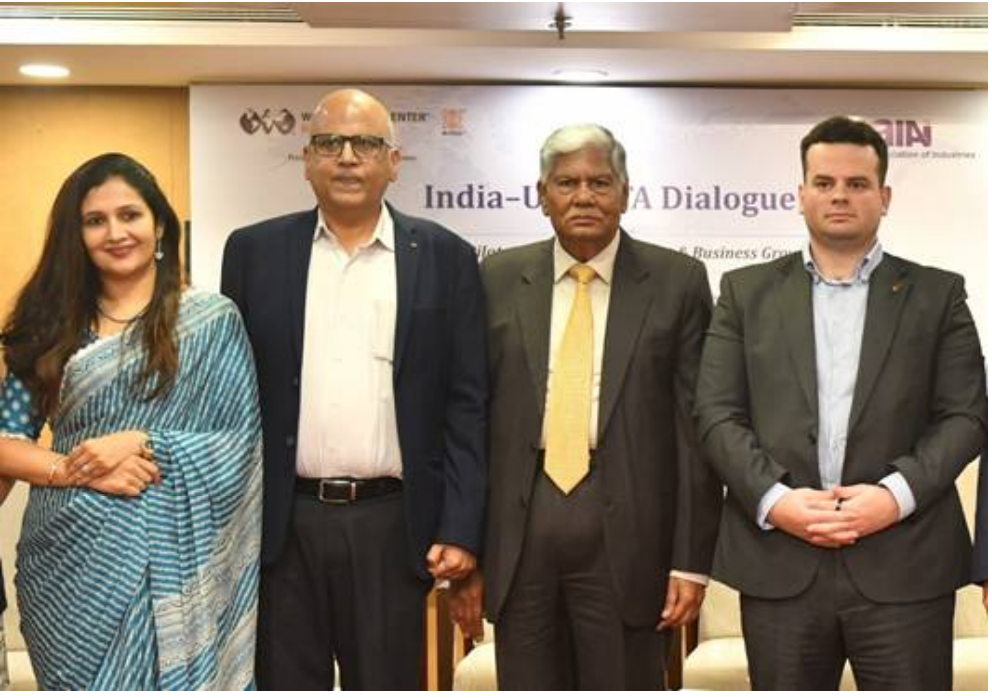
Ms. Priya Pansare, Senior Director, World Trade Center Mumbai; Shri R.K. Mishra, Additional Director
General of Foreign Trade (DGFT), Government of India; Dr. Vijay Kalantri, President, All India Association
of Industriess (AIAI) and Chairman, MVIRDC WTC, Mumbai ; Mr. Mark Birrell, Trade Counsellor – South
Asia, British Deputy High Commission, Mumbai at the India-UK CETA Dialogue.
The India–UK Comprehensive Economic and Trade Agreement (CETA) marks a landmark step in bilateral
economic relations and is one of India’s most ambitious trade agreements, covering goods, services,
investment and mobility. It presents a major opportunity for Indian exporters and MSMEs to strengthen
their presence in the UK, access new markets and integrate more deeply into global supply chains,”
said Shri R.K. Mishra, Additional Director General of Foreign Trade (DGFT), Mumbai, Ministry of
Commerce & Industry, Government of India, at the “India–UK CETA Dialogue: Unlocking New Trade &
Investment Opportunities” organised by All India Association of Industries (AIAI) in association
with MVIRDC World Trade Center Mumbai.
“The focus under CETA must now shift towards effective utilisation of the agreement by businesses,
particularly MSMEs, through tariff benefits, simplified rules of origin, self-certification and opportunities
in UK government procurement. The Government of India’s Export Promotion Mission will further
strengthen MSME competitiveness through export credit, market intelligence, certification and
compliance support. The UK’s strengths in technology, finance and advanced manufacturing, combined
with India’s skilled manpower, manufacturing capacity and entrepreneurial strength, can create significant
new opportunities. Stronger business-to-business connections and greater awareness at the enterprise
level will be critical to realising CETA’s full potential,” said Shri R.K. Mishra,
Mr. Mark Birrell, Trade Counsellor – South Asia, British Deputy High Commission, Mumbai, said, “CETA
is a landmark agreement between two of the world’s largest and most dynamic economies. It makes trade
cheaper, quicker and easier, but its success will ultimately depend on businesses using the opportunities it
creates through exports, investment and collaboration. The agreement opens significant opportunities
across advanced manufacturing, medical devices, aerospace, automotive, clean energy, textiles,
engineering goods and processed foods, as well as services such as finance, education, research and
innovation. Mumbai and Maharashtra will have an important role to play in strengthening the India–UK
trade and investment corridor.”
Dr. Vijay Kalantri, President, All India Association of Industriess (AIAI) and Chairman, MVIRDC WTC,
Mumbai, said, “CETA provides zero-duty access to nearly 99% of India’s exports to the UK, covering almost
100% of India’s export value, while India will remove or reduce tariffs on 90% of tariff lines for UK goods,
covering 92% of existing UK goods exports to India. Key Indian sectors such as textiles, pharmaceuticals,
leather, engineering goods and other labour-intensive industries stand to benefit significantly from
improved market access and lower tariffs. Effective implementation, greater awareness among MSMEs and
stronger business-to-business linkages will be crucial to converting these advantages into higher exports,
investments and long-term commercial partnerships.”
Ms. Garima Jain,International Market Advisor, Export Support Service; Mr. Sandeep Kudtarkar, Country
Head, UKEF; and Mr. Abhishek Jha, Head of Inward Investment – Western India, shared their
perspectives on the practical opportunities emerging from CETA. They highlighted the growing interest of
UK companies in partnering with Indian businesses, the availability of government-backed export finance
for eligible trade transactions, and the scope for Indian companies to use the UK as a platform for
international expansion. They also pointed to opportunities across technology, healthcare, advanced
engineering, energy, professional services, R&D and innovation, along with the benefits of the Double
Contribution Convention for Indian companies deploying professionals to the UK.
Ms. Priya Pansare, Senior Director, MVIRDC World Trade Center Mumbai, said, “The India–UK CETA
opens significant opportunities for both trade and services, with several sectors poised to benefit from
greater market access, investment, technology collaboration and business partnerships. By enabling
Indian enterprises, particularly MSMEs, to integrate more deeply with global markets and value chains, the
agreement can contribute meaningfully towards strengthening India’s competitiveness, creating
employment and advancing the vision of Viksit Bharat 2047.”
The dialogue brought together MSMEs, exporters, entrepreneurs and industry representatives to
understand how CETA can be translated into practical opportunities in trade, investment, financing,
technology collaboration and market partnerships.
Regards,
Sangeeta Jain
Senior Director
All India Association of Industries (AIAI)